Highlighting RO-Crate Features in Galaxy
14 January 2026 | By Eli Chadwick
Galaxy is an open-source platform for FAIR data analysis. It enables users to create and run their own workflows, and includes tools from a wide range of scientific domains.
RO-Crate and WorkflowHub support was integrated into Galaxy as part of the EuroScienceGateway project which ran from September 2022 to August 2025.
The RO-Crate integration is designed to be usable by anyone, including users who do not know what RO-Crate is. Galaxy populates the RO-Crate metadata automatically using information it has stored - including metadata that users have added themselves through the Galaxy interface when completing tasks like creating a workflow. Users do not need to worry about the technicalities of the format, they simply benefit from it by default when importing/exporting data.
Importing data as RO-Crate
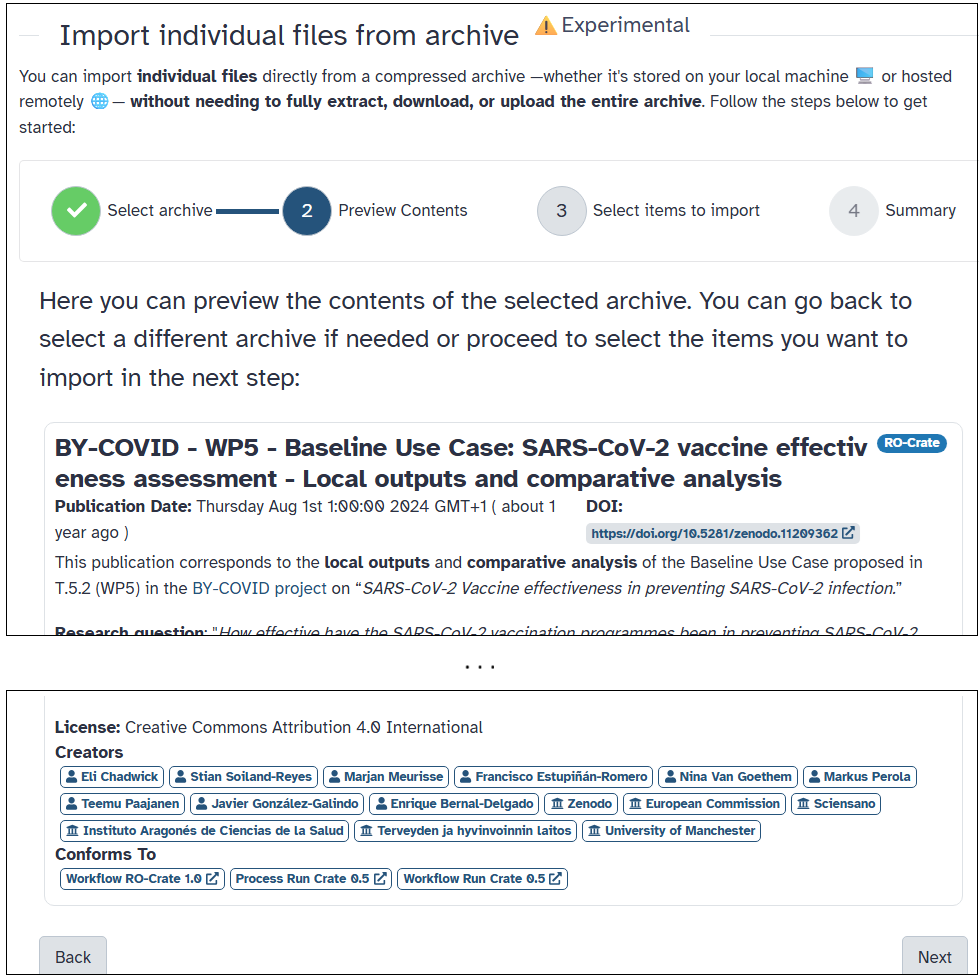
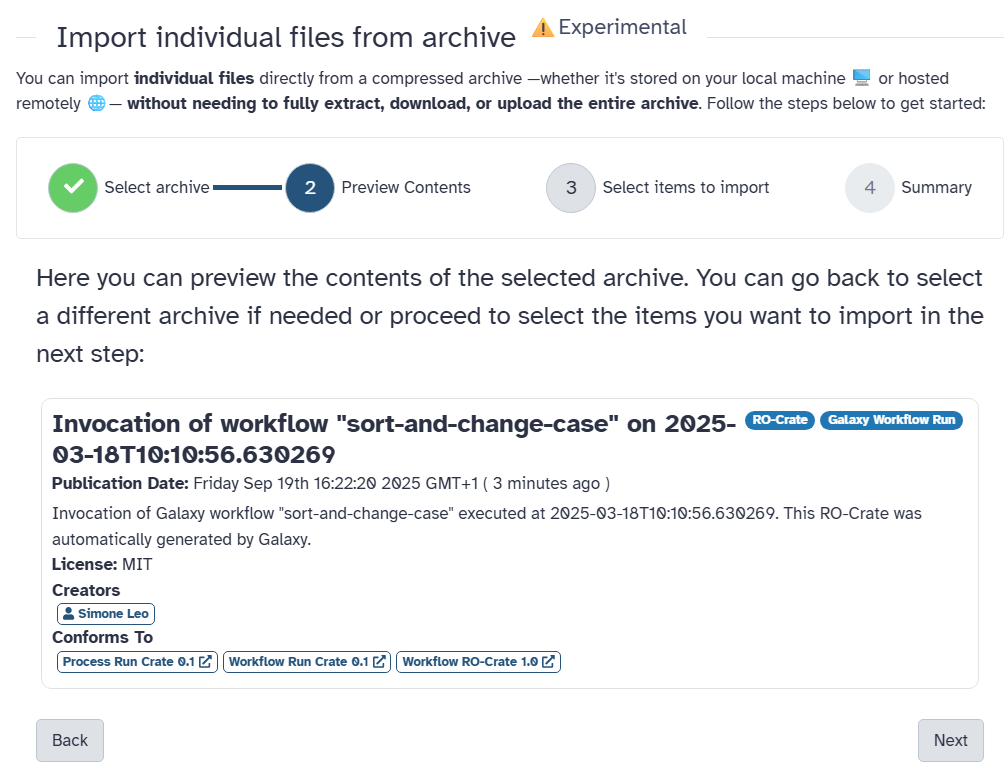
Galaxy has a ZIP explorer integration which allows the user to import individual files from ZIP archives. When importing a ZIP file that is also an RO-Crate, core metadata is extracted from the RO-Crate and displayed when exploring the ZIP.
Exporting data as RO-Crate
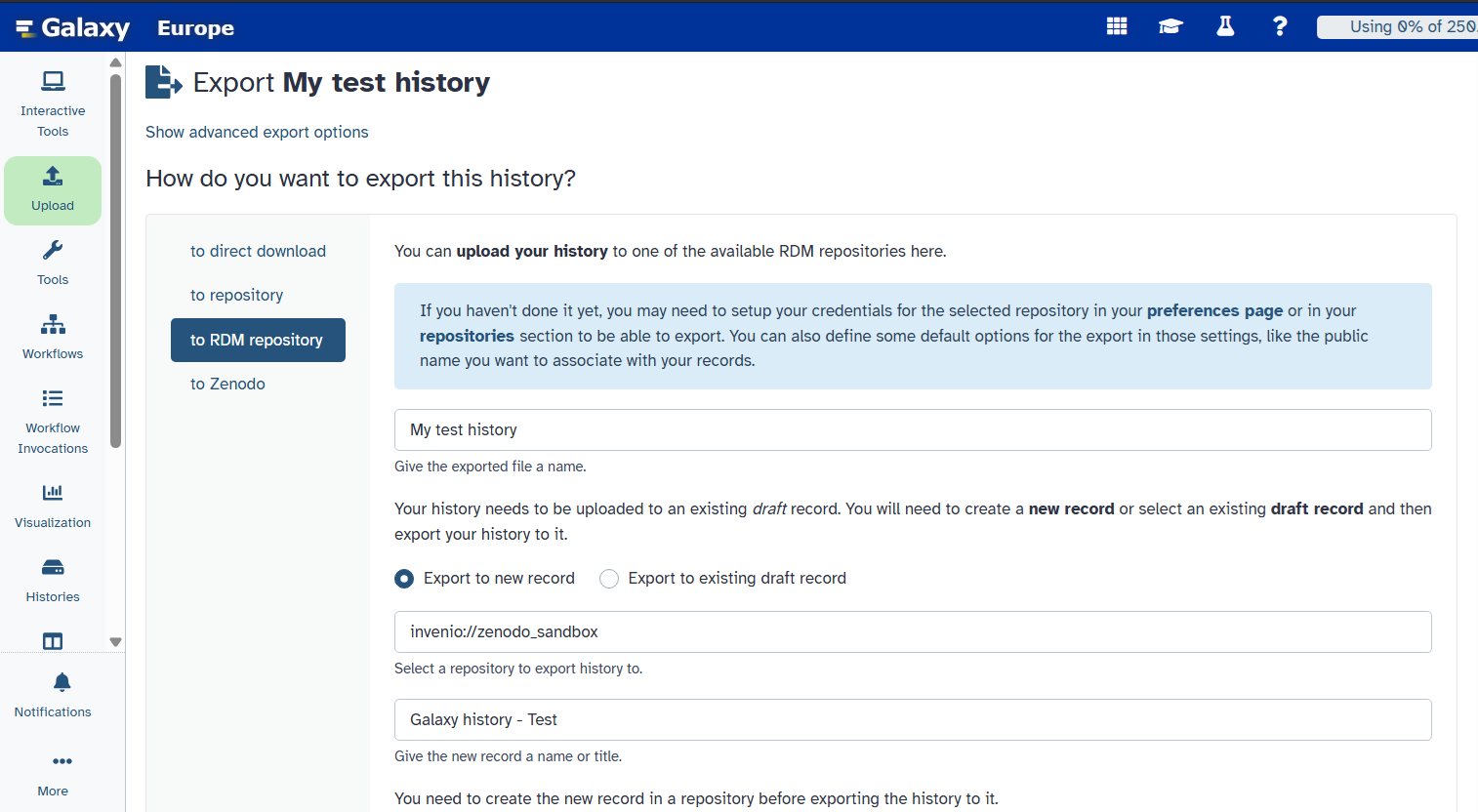
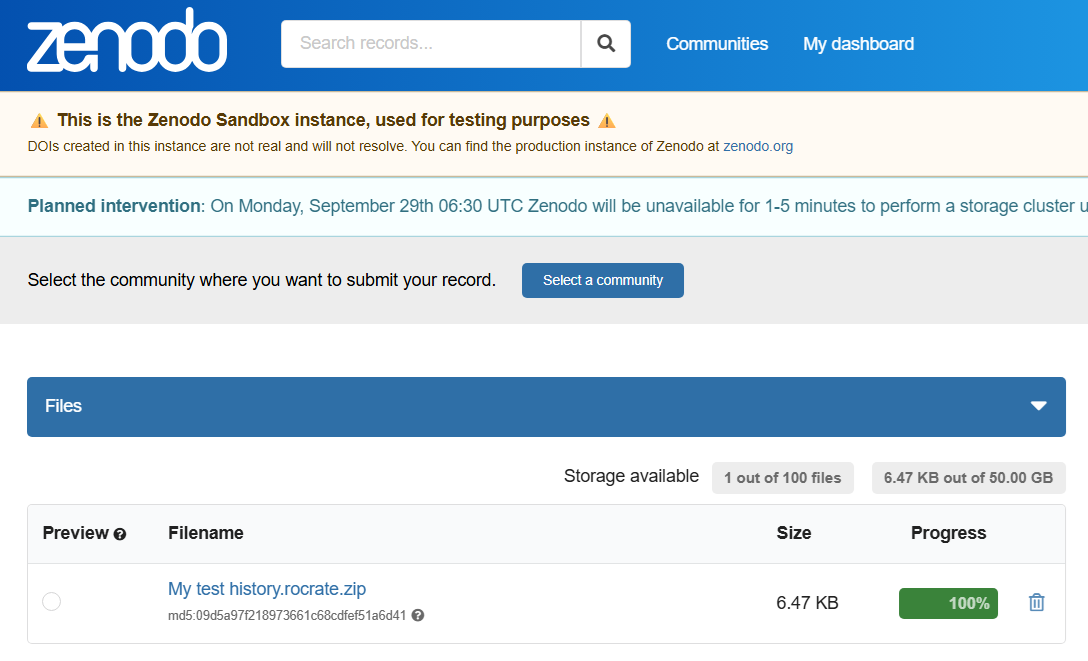
A Galaxy history can be exported to a file, which can be downloaded directly or uploaded to data repositories like Zenodo. The default format for an exported history is an RO-Crate ZIP file.
Exporting workflow invocation as RO-Crate
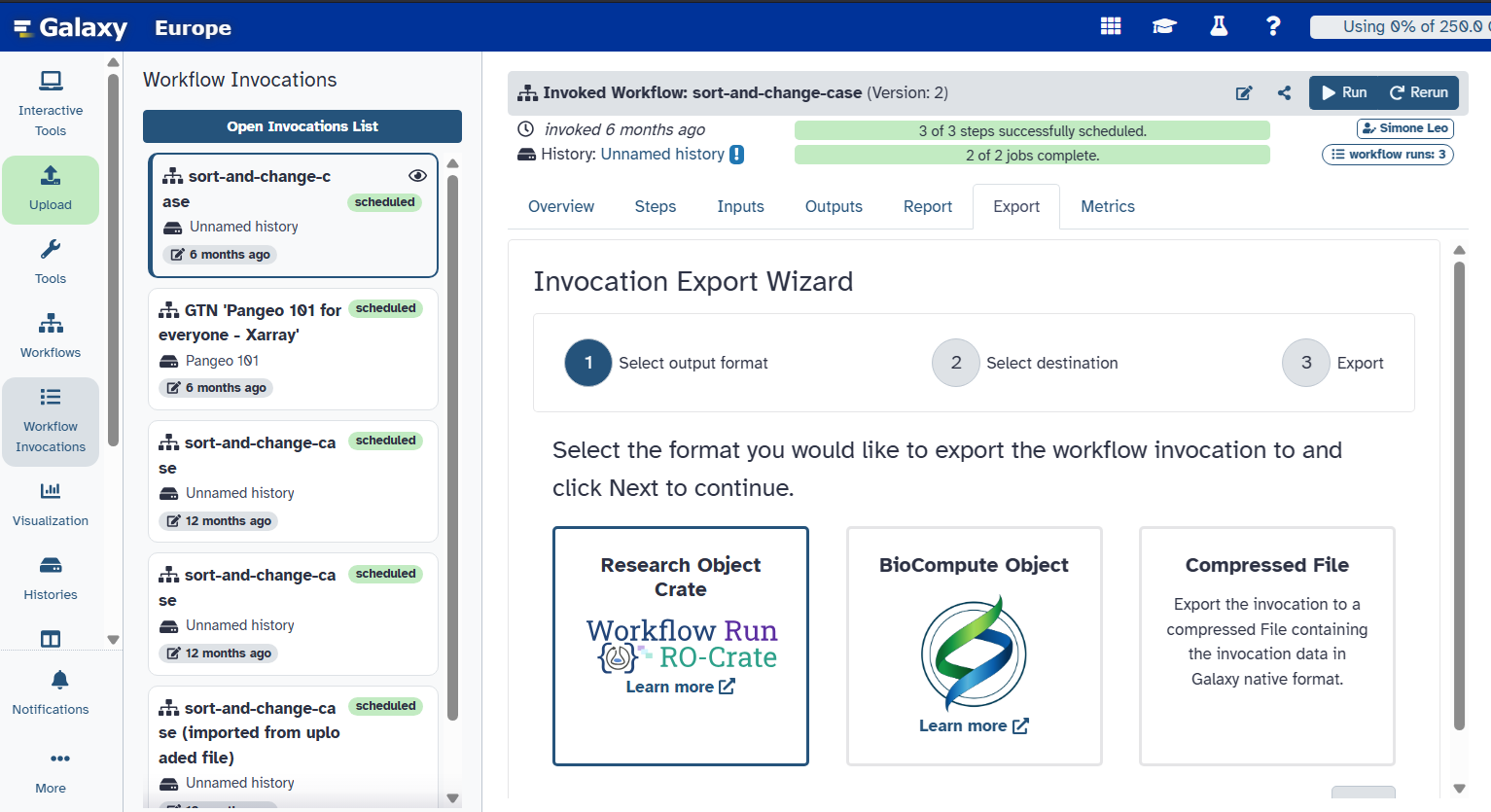
An individual invocation of a Galaxy workflow can be exported as a RO-Crate following the Workflow Run Crate profile. As with the history export, the output can be downloaded as a file or uploaded to a data repository. The workflow file, inputs, outputs, and Galaxy metadata are included in the RO-Crate.
Re-import exported RO-Crates!
Because Galaxy can import RO-Crates, you can re-import an exported workflow invocation or history back into Galaxy. This facilitates reproducibility of workflow runs, as well as general reuse of exported data (for example, you could import just the workflow file from an invocation and then run that workflow with different data).
WorkflowHub integration
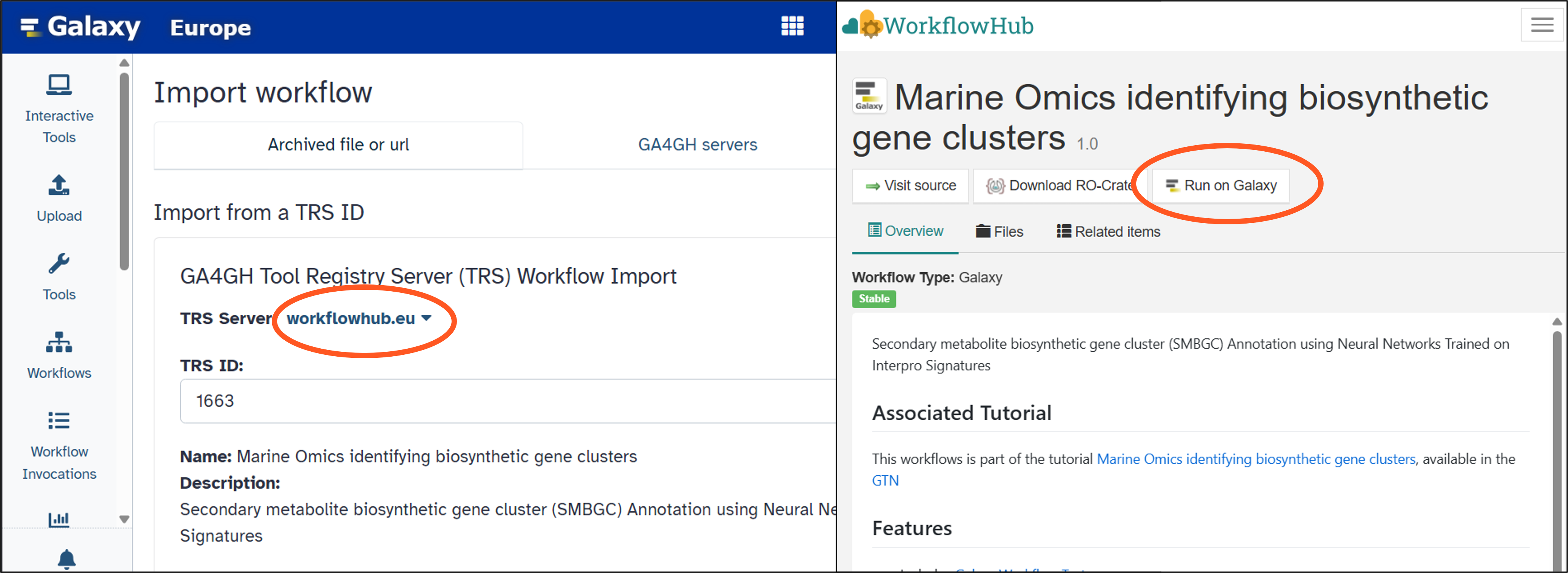
Galaxy is also closely integrated with the WorkflowHub workflow registry. Any workflow registered on WorkflowHub can be exported from WorkflowHub as a Workflow RO-Crate.
In the Galaxy interface, you can import workflows from WorkflowHub. In the WorkflowHub interface, Galaxy workflows are shown with a button to launch the workflow in a Galaxy instance where the required tools are available.
Workflows developed by the Intergalactic Workflow Commission and the Galaxy Training Network are automatically registered with WorkflowHub, enhancing their FAIRness.
ELN integration
Galaxy can already integrate with RSpace and eLabFTW, which are Electronic Lab Notebook (ELN) platforms. Both of these platforms are part of the ELN consortium, a community which develops standards for interoperable ELNs, including the ELN file format which is based on RO-Crate.
RO-Crate therefore offers opportunities for even closer integration and interoperability between Galaxy and ELNs in the future.
Training Material
The Galaxy Training Network includes a collection of tutorials on making workflows FAIR with RO-Crate. This includes tutorials on exporting Workflow Run RO-Crates from Galaxy as seen above, and adding tests to a Galaxy workflow to create a Workflow Testing RO-Crate. Development of these tutorials was supported by the BY-COVID project.
There are also tutorials on domain-specific RO-Crate applications: DataPLANT ARCs (from the DataPLANT project) and An earth system RO-Crate (from the FAIR-EASE project).
Related use cases
The ELN file format has been defined as an archive format to capture Electronic Laboratory Notebooks (ELN). The format is based on RO-Crate and is supported by a number of ELN softwares.

Galaxy is a platform for FAIR data analysis which supports the building and execution of workflows. It can import and export RO-Crates for both regular datasets and workflow executions.

WorkflowHub imports and exports Workflow RO-Crates, using it as an exchange format. They are a specialization of RO-Crate for packaging an executable workflow with all necessary documentation. It is aligned with, and intends to strictly extend, the more general Bioschemas ComputationalWorkflow profile.